0 entries | 12 on the shelf
Journal
Findings, experiments, half-formed thoughts and longer discussions, mostly about single-cell biology, AI agents for science and scientific computing. Below them, a shelf of slides, posters and write-ups from talks, workshops and challenges. Follow along with the RSS feed.
Entries
—
No entries yet. The first pages of this journal are still being written.
Invisible ink! You found it without a black light. The key is SIXER.
Slides, posters and write-ups
2026
-
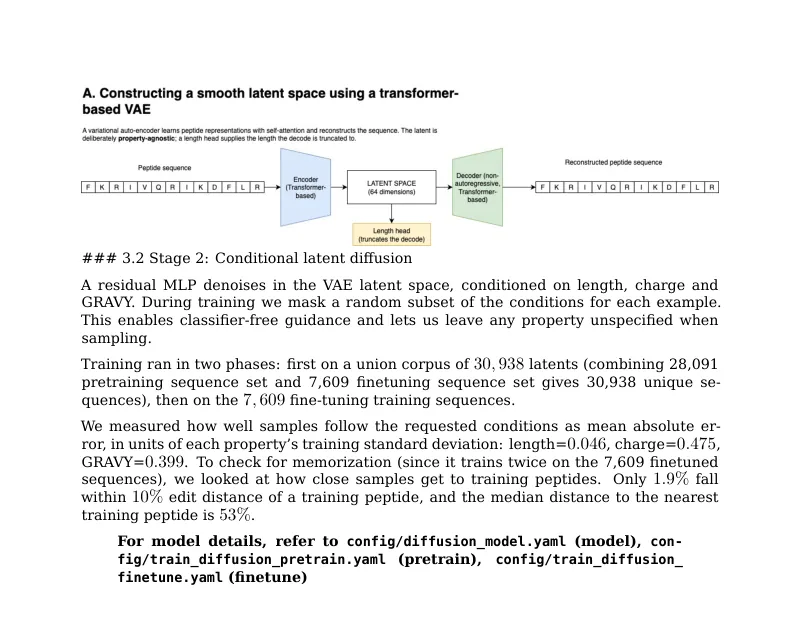
A Three-Stage Generative Pipeline for Antimicrobial Peptide Design
AMP Challenge, NeurIPS 2026 Competition Track | Hazra Group
A variational autoencoder, a conditional latent diffusion model and a potency ranker that together design and rank candidate antimicrobial peptides; the organisers test the top designs in the lab. Co-first author with Siddhant Poudyal.
-
Learning Circles: Flipping the Odds
Ashoka Horizons Achievers Programme | pre-course webinar
Can data tell you whether a coin is fair, and how much data do you need? A hands-on notebook on randomness, the law of large numbers and bias, ahead of Data Science: Solving for Real-World Challenges.
-
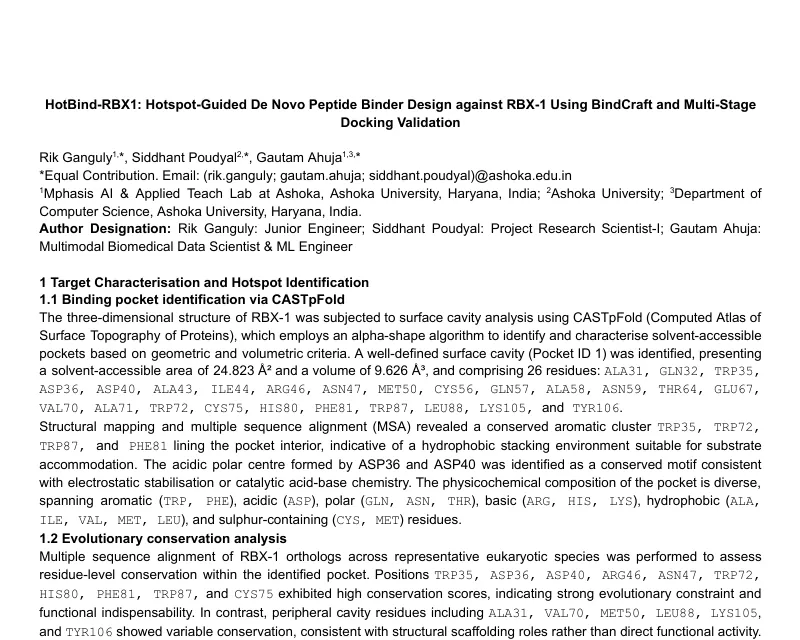
HotBind-RBX1: Hotspot-Guided De Novo Peptide Binder Design against RBX-1
RBX-1 Binder Design Competition 2026
Peptide binders designed against the RBX-1 surface pocket with BindCraft, guided by eight hotspot residues and filtered through multi-stage docking. Not selected; we are taking the work further independently. Co-first author with Rik Ganguly and Siddhant Poudyal.
2025
-
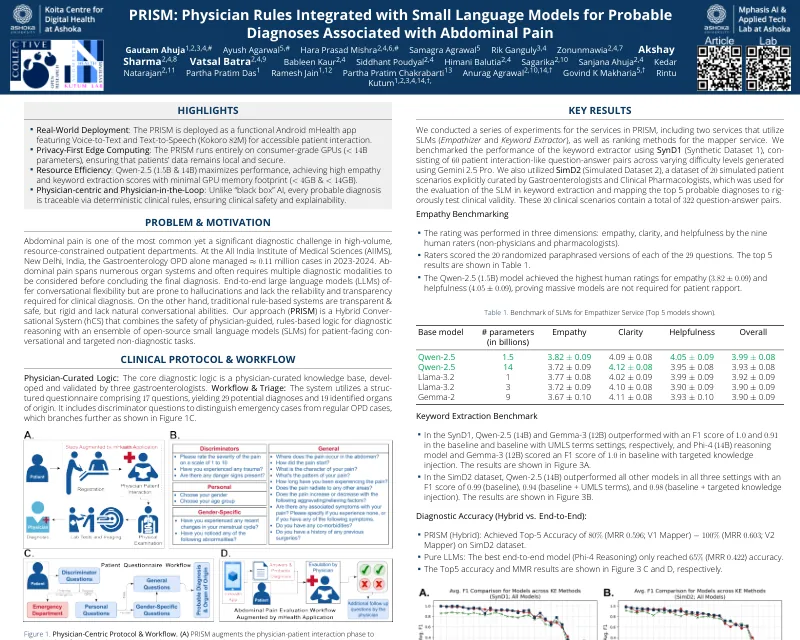
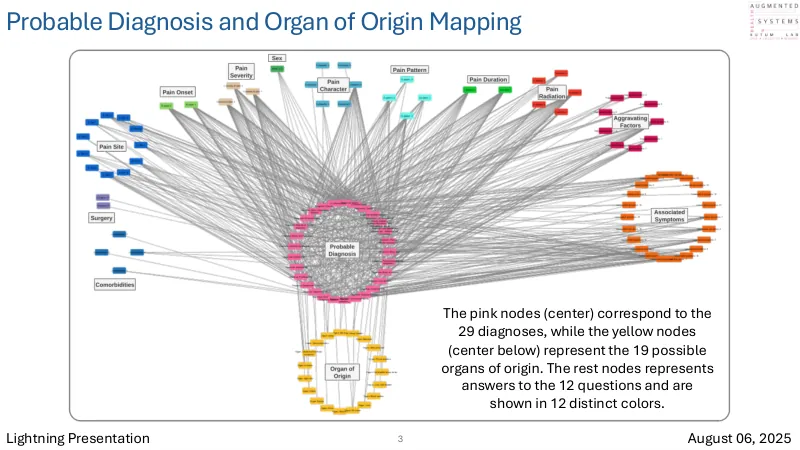
PRISM: Physician Rules Integrated with Small Language Models for Probable Diagnoses Associated with Abdominal Pain
GenAI4Health Workshop, NeurIPS 2025
The poster for my undergraduate thesis: physician-written rules do the diagnostic reasoning while small open-source language models handle the conversation.
-
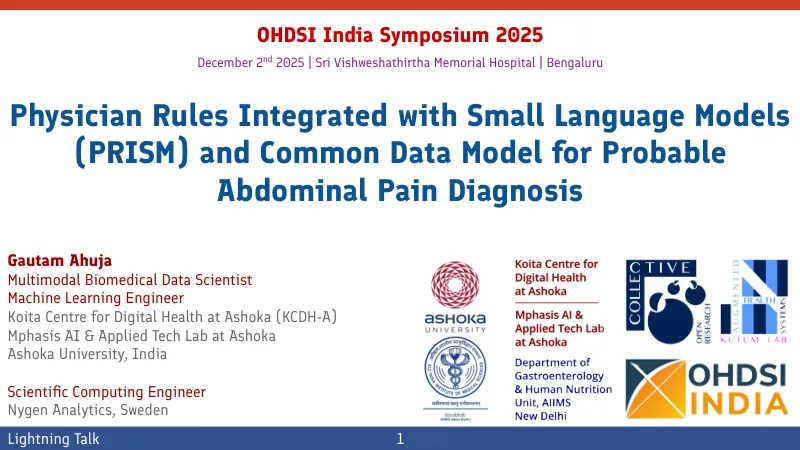
PRISM and the Common Data Model for Probable Abdominal Pain Diagnosis
OHDSI India Symposium 2025, Bengaluru | lightning talk
How PRISM's rule-guided small language models and the OMOP Common Data Model fit together for abdominal-pain triage in outpatient clinics.
-
Open-Source Scientific Computing for Omics Data Integration: Hands-On Session
Winter School on Omics Data Integration, Dr. B. R. Ambedkar Center for Biomedical Research, University of Delhi
Linux and the shell, conda environments, Git and GitHub, and Jupyter and Colab notebooks, taught as a teaching fellow with Vinita Sharma.
-
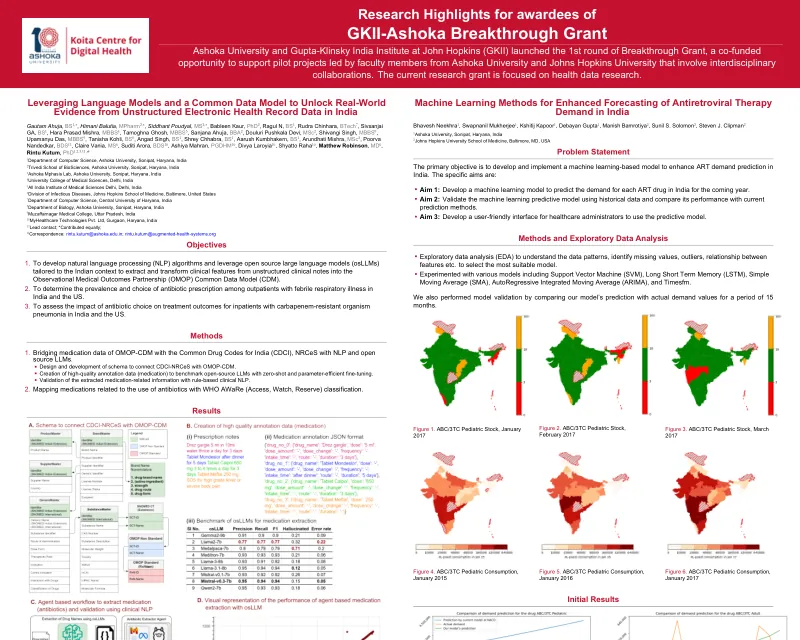
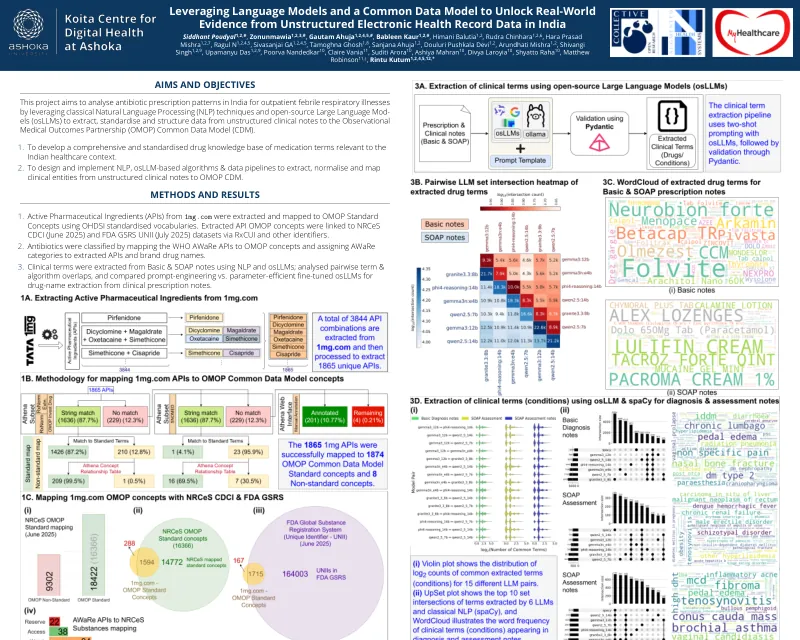
Leveraging Language Models and a Common Data Model to Unlock Real-World Evidence from Unstructured Electronic Health Record Data in India
GKII–Ashoka Breakthrough Grant research highlights, Ashoka University
Mapping unstructured outpatient notes to the OMOP Common Data Model with NLP and open-source language models, to study antibiotic prescribing for febrile respiratory illness. Joint first author.
-
A Conversational mHealth App with a Language Model and Rule-Based Decision Support for Abdominal Pain
Koita Centre for Digital Health Annual Day 2025 | lightning talk
The Android app, orchestrator and benchmark of open-source language models behind PRISM, for probable diagnosis of abdominal pain in outpatient clinics.
-
Ensemble Prediction and Embedding-based Closeness for WDR91 Hit Selection
DREAM Target 2035 Drug Discovery Challenge | Step 2
Two ways to choose 50 likely binders of WDR91: the highest scores from our Step 1 models, or MolFormer embeddings closest to known WDR91 ligands.
-
Weighted Machine Learning with Highly Variable Fingerprints to Predict WDR91 Hits
DREAM Target 2035 Drug Discovery Challenge | Step 1 (3rd of 49)
A class-weighted ensemble of gradient-boosted models built on the most variable bits of nine molecular fingerprints, ranking likely WDR91 binders.

2024
-
Leveraging Language Models and a Common Data Model to Unlock Real-World Evidence from Unstructured Electronic Health Record Data in India
GKII–Ashoka Breakthrough Grant research highlights, Ashoka University
The first presentation of the project above, from building a drug knowledge base to the first extraction pipelines. First author.
-
Random Forest Based Prediction of Mixture Odor Similarity
DREAM Olfactory Mixtures Prediction Challenge
A random forest that predicts how alike two mixtures of odorants smell, from the chemical descriptors of their components.